The Ultimate Sourcing Guide to Polycarbonate, FRP, and PVC Roofing Sheets: Direct Factory Insights & Canton Fair Phase 2 Invitation (Booth 11.2M10)
Section 1: Introduction & Executive Summary
- Global Demand for Advanced Roofing Solutions:
- Overview of the global industrial, agricultural, and commercial roofing panel market.
- Why plastic and composite roofing panels (PC, FRP, PVC) are replacing traditional steel and clay tiles.
- Purpose of This Guide:
- Providing international buyers with a complete manufacturing, specification, and procurement blueprint.
- Special Invitation to Canton Fair Phase 2:
- Announcing our booth location (Hall 11.2, Stand M10).
- What overseas visitors can inspect at our booth (product samples, UV/impact test demonstrations, factory pricing schedules).
Section 2: Deep Dive into Polycarbonate (PC) Sheets
- What is Polycarbonate Roofing?
- Raw material specifications (100% Sabic / Bayer virgin resins).
- Product Line Categorization & Technical Specs:
- Solid Polycarbonate Sheets: High impact resistance (200x stronger than glass), bulletproof characteristics, optical clarity.
- Hollow / Multiwall Polycarbonate Sheets: Twin-wall, triple-wall, honeycomb structures. Thermal insulation performance (U-value comparison).
- Corrugated Polycarbonate Sheets: Profile matching with steel cladding for industrial skylights.
- Key Technical Parameters:
- Light transmission rate (up to 88%).
- Co-extruded UV protection layer (50-micron anti-UV coating).
- Fire retardancy rating (Class B1 / UL 94 V-0).
- Temperature resistance (-40°C to +120°C).
- Primary Applications:
- Commercial skylights, architectural canopies, agricultural greenhouses, soundproof barriers.
- Quality Inspection & Sourcing Checkpoints:
- How to distinguish 100% virgin material from recycled content.
- Bending and impact tests for global buyers.
Section 3: Comprehensive Guide to FRP (Fiberglass Reinforced Plastic) Sheets
- Understanding FRP/GRP Composite Roofing:
- Fiberglass matting/roving combined with high-grade resin matrix.
- Types of FRP Panels:
- Corrugated FRP Daylight Panels: Matching industrial steel building profiles.
- Anticorrosive FRP Sheets: Specialized for chemical plants, coastal warehouses, and fertilizer storage.
- Flat FRP Panels: Cold room lining, truck body panels, interior wall cladding.
- Core Advantages & Performance Metrics:
- Corrosion resistance against acid, alkali, and industrial fumes.
- High strength-to-weight ratio.
- Light diffusion properties (preventing hotspot damage in agriculture).
- Continuous molding line technology (double-track production explanation).
- Weatherability & Lifespan Expansion:
- Anti-aging film technology (e.g., Melinex 301 / Gel coat options).
- 20-to-25-year service life guarantee in tropical/extreme climates.
Section 4: PVC & ASA Synthetic Resin Roofing Tiles
- Overview of PVC Building Materials:
- Multi-layer co-extrusion technology.
- Product Variations:
- ASA PVC Synthetic Resin Tiles: Traditional Spanish tile aesthetic combined with modern polymer durability. Ideal for residential villas and public works.
- UPVC Corrugated Sheets: 3-layer heat-insulated structural panels for factory workshops.
- Transparent/Translucent PVC Panels: Cost-effective day-lighting options.
- Key Benefits for Buyers:
- Thermal and sound insulation (noise reduction up to 30dB during heavy rain).
- Color fastness: ASA surface coating prevents color fading under intense solar UV exposure.
- Fire safety and waterproofing performance.
- Comparative Application Matrix:
- When to choose PVC over metal decking or FRP.
Section 5: Comparative Analysis Matrix (PC vs. FRP vs. PVC)
(Use Markdown tables and detailed comparative commentary)
- Comparison Factors: Tensile strength, light transmission, thermal insulation, chemical resistance, cost per square meter, lifespan, and ideal application scenarios.
- Selection Decision Tree: A step-by-step decision guide helping purchasing managers select the exact material for their specific project environment (e.g., Chemical plant vs. Commercial mall skylight vs. Agricultural greenhouse).
Section 6: Factory Capabilities, OEM Services & Quality Control
- Manufacturing Facility & Production Lines:
- Extrusion lines, continuous FRP molding capacity, daily/monthly output metrics.
- Customization (OEM/ODM):
- Custom profiles/wave shapes, color matching (RAL system), thickness tolerances, length customization.
- Private label branding and custom protective film options.
- International Quality Certifications & Standards:
- ISO9001, CE compliance, SGS testing reports (Fire, Tensile, UV aging).
- Packaging, Loading & Global Logistics:
- Export packaging (wooden pallets, waterproof wrapping, protective film).
- Container loading optimization for maximum CBM usage.
Section 7: Meet Us at Canton Fair Phase 2 (Hall 11.2, Booth M10)
- Exhibition Announcement:
- Official invitation details for overseas buyers visiting Guangzhou.
- On-Site Highlights at Booth 11.2M10:
- Physical sample displays for PC, FRP, and ASA PVC panels.
- Live product performance tests (impact testing, clarity checks, fire resistance demos).
- One-on-one pricing consultations and distributor policy discussions.
- Pre-Show Appointment & Contact Call-to-Action:
- How to book an exclusive meeting slot at our booth.
- Direct contact links: WhatsApp, Email, and Inquiry Form.
Section 8: Frequently Asked Questions (FAQ)
(Targeting long-tail SEO queries)
- What is the difference between Polycarbonate and FRP sheets for daylighting?
- How long do ASA PVC resin tiles last in high-temperature regions?
- Can your factory manufacture custom corrugated profiles to match existing steel sheets?
- What is the minimum order quantity (MOQ) for export containers?
- How can I request free sample kits before attending the Canton Fair?
Section 1: Introduction & Executive Summary
The demand for high-performance, durable, and energy-efficient building materials has grown rapidly across global construction and agricultural sectors. Today, finding a reliable High Quality Plastic & FRP Roofing Sheets Manufacturer in China is essential for importers, distributors, and general contractors seeking to balance long-term structural integrity with cost efficiency. Modern industrial developments, commercial complexes, and agricultural greenhouses are increasingly moving away from heavy, corrosion-prone traditional materials like steel decking, concrete tiles, and brittle glass. Instead, lightweight and weather-resistant polymer solutions—specifically Polycarbonate (PC), Fiberglass Reinforced Plastic (FRP), and Polyvinyl Chloride (PVC) panels—have become the industry standard for daylighting, roofing, and wall cladding.
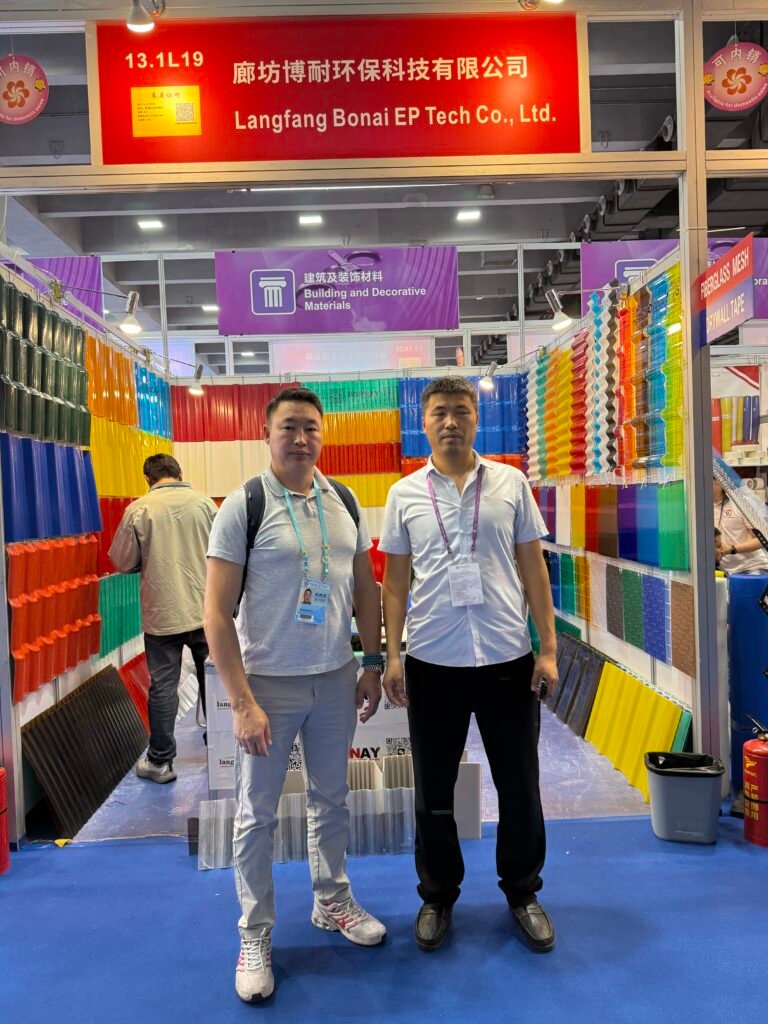
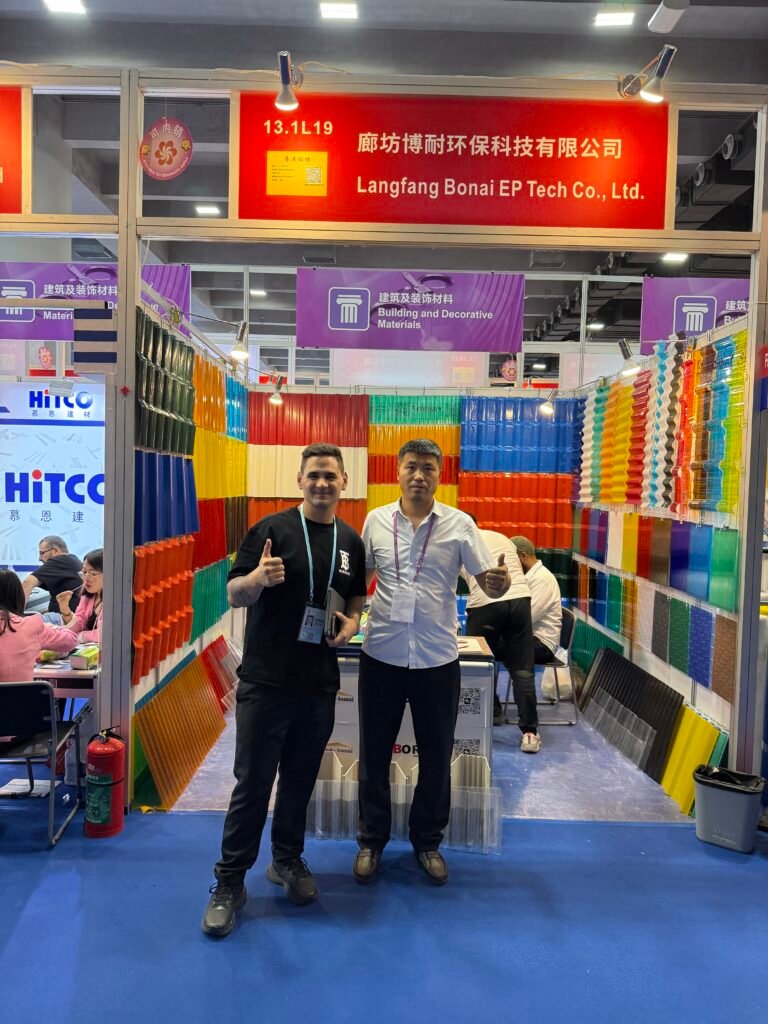
This comprehensive guide serves as an authoritative procurement blueprint for international purchasing managers and engineering specialists. By exploring raw material specifications, co-extrusion technology, UV-resistance coatings, and fire ratings, this article helps you determine the precise panel configurations for your specific climate and project needs. Furthermore, as an established exporter based in Langfang, China, we warmly invite you to meet our engineering and export team at the Canton Fair Phase 2 (Hall 11.2, Stand M10). At our booth, visitors can examine physical samples, inspect live anti-impact and UV-resistance test setups, and discuss factory-direct wholesale pricing schedules.
Section 2: Deep Dive into Polycarbonate (PC) Sheets
1. What is Polycarbonate Roofing?
Polycarbonate is an amorphous thermoplastic known for its exceptional toughness, high optical clarity, and remarkable heat resistance. Unlike lower-grade plastics that become brittle under prolonged solar exposure, premium polycarbonate sheets are engineered using 100% virgin raw materials sourced from leading global suppliers such as Sabic Lexan and Bayer Makrolon. Choosing 100% virgin resin ensures that the sheets retain maximum light transmission and structural ductility over decades without premature yellowing or cracking.
2. Product Line Categorization & Technical Specifications
- Solid Polycarbonate Sheets:Also known as polycarbonate flat sheets or clear armor panels, solid polycarbonate offers virtually unbreakable protection. With an impact strength nearly 200 times that of standard glass and 30 times that of acrylic, solid PC panels are widely used in security glazing, skylights, acoustic sound barriers along highways, and heavy-duty industrial covers. They maintain crystal-clear transparency while offering superior bulletproof and vandal-resistant characteristics.
- Hollow / Multiwall Polycarbonate Sheets:Engineered with internal channels and air chambers, multiwall polycarbonate sheets—available in twin-wall, triple-wall, four-wall, and honeycomb structures—provide exceptional thermal insulation. The multi-layer air gaps significantly lower the heat transfer coefficient ($U$-value), keeping interiors cooler in hot climates and retaining heat in cold regions. This thermal efficiency makes multiwall sheets the premier choice for commercial greenhouses, skylight domes, atrium roofs, and office partitions.
- Corrugated Polycarbonate Sheets:Designed to match standard trapezoidal and sinusoidal steel cladding profiles, corrugated polycarbonate panels are seamlessly integrated into metal building roofs as daylighting strips. They allow natural sunlight to penetrate large factory floors and warehouses, dramatically reducing daylight electricity consumption without risking roof leakage at overlap joints.
3. Key Technical Parameters & Performance Metrics
- High Light Transmission:Clear solid polycarbonate sheets deliver up to 88% light transmission, rivaling standard glass while offering far superior safety and weight advantages.
- Co-Extruded UV Protection:Solar ultraviolet rays are the primary cause of polymer degradation. Our polycarbonate sheets feature a specialized 50-micron anti-UV protective layer co-extruded onto the weather side. This barrier blocks 99% of harmful UV radiation, preventing degradation and maintaining transparency.
- Fire Retardancy Rating:Polycarbonate carries a high fire ignition threshold. Certified under Class B1 (GB8624) / UL 94 V-0, the material is self-extinguishing. In the event of a fire, it produces minimal smoke and does not produce flaming droplets that spread flames.
- Extreme Temperature Resistance:Polycarbonate maintains its structural stability across a broad thermal envelope, operating reliably from -40°C to +120°C without warping, shrinking, or becoming brittle.
4. Primary Applications
- Commercial & Industrial Skylights: Providing natural illumination for large warehouses, shopping malls, sports arenas, and transportation hubs.
- Agricultural Greenhouses: Ensuring optimal light diffusion and heat preservation for high-value crop cultivation.
- Architectural Canopies & Walkways: Creating sleek, modern exterior roofing for bus shelters, carports, entryways, and patio covers.
- Highway & Railway Soundproof Barriers: Utilizing high impact strength and sound reduction properties along major infrastructure corridors.
5. Quality Inspection & Sourcing Checkpoints for International Buyers
When sourcing polycarbonate sheets globally, distinguishing high-quality products from inferior alternatives is critical to project longevity:
- Virgin vs. Recycled Content: Inferior sheets made with recycled scrap plastic often show a dark yellowish tint, small black specs/bubbles, and quickly fail under UV exposure. Always request certificate verification proving 100% virgin Sabic or Bayer resin usage.
- Weight & Thickness Tolerance: Ensure the supplier adheres strictly to target thickness specs. Unreliable manufacturers often reduce weight per square meter to cut costs, weakening wind load capacity.
- Flexibility & Impact Testing: High-quality virgin polycarbonate can be cold-bent to specified radiuses without cracking. On-site impact testing (such as a hammer strike demo) quickly confirms the toughness of solid panels.


