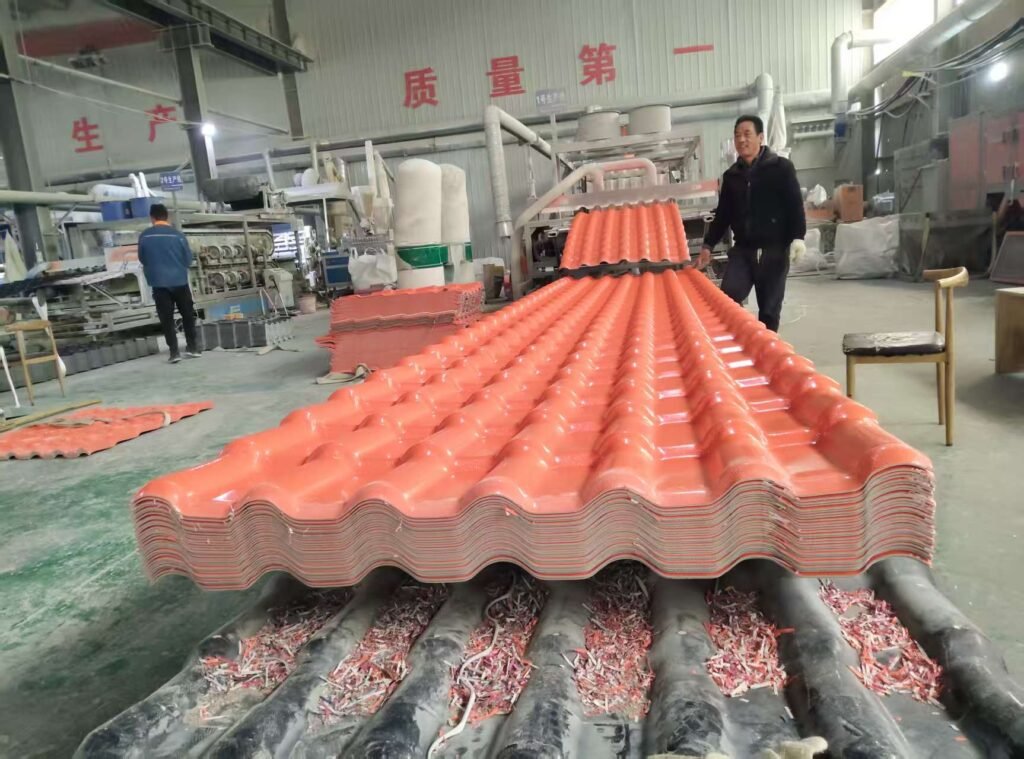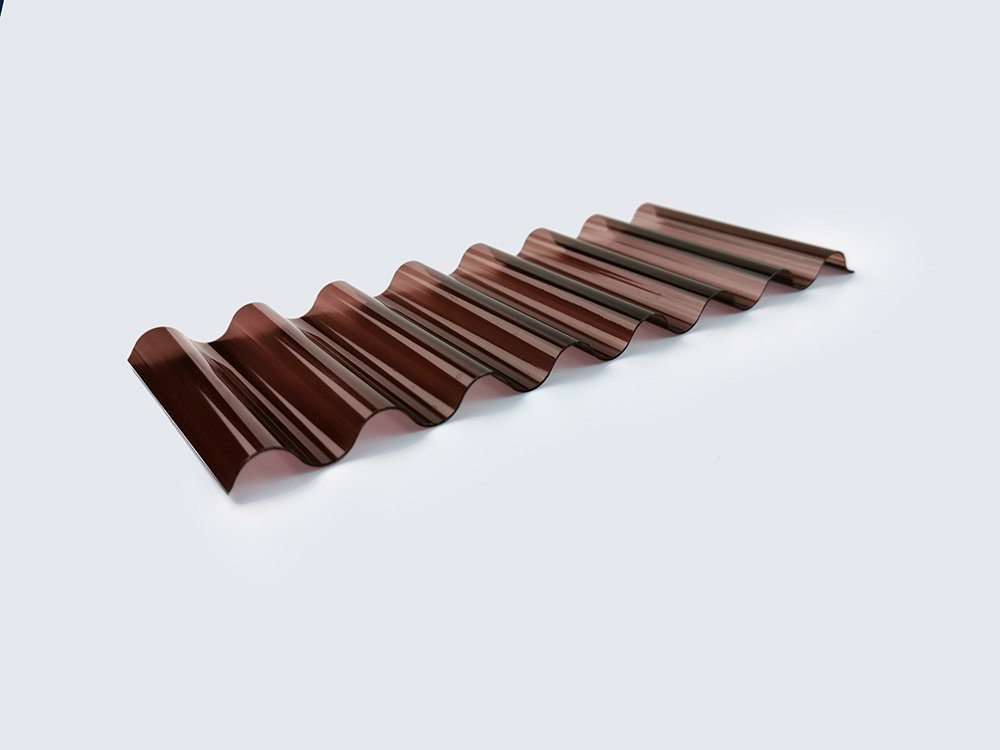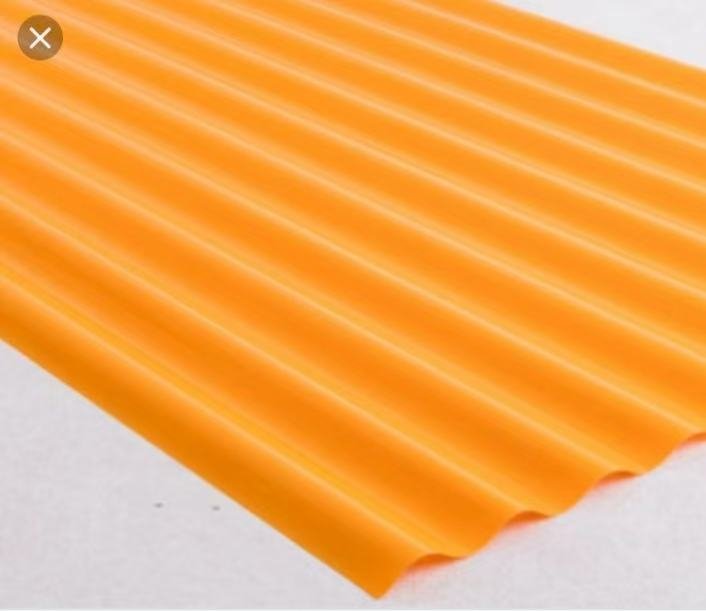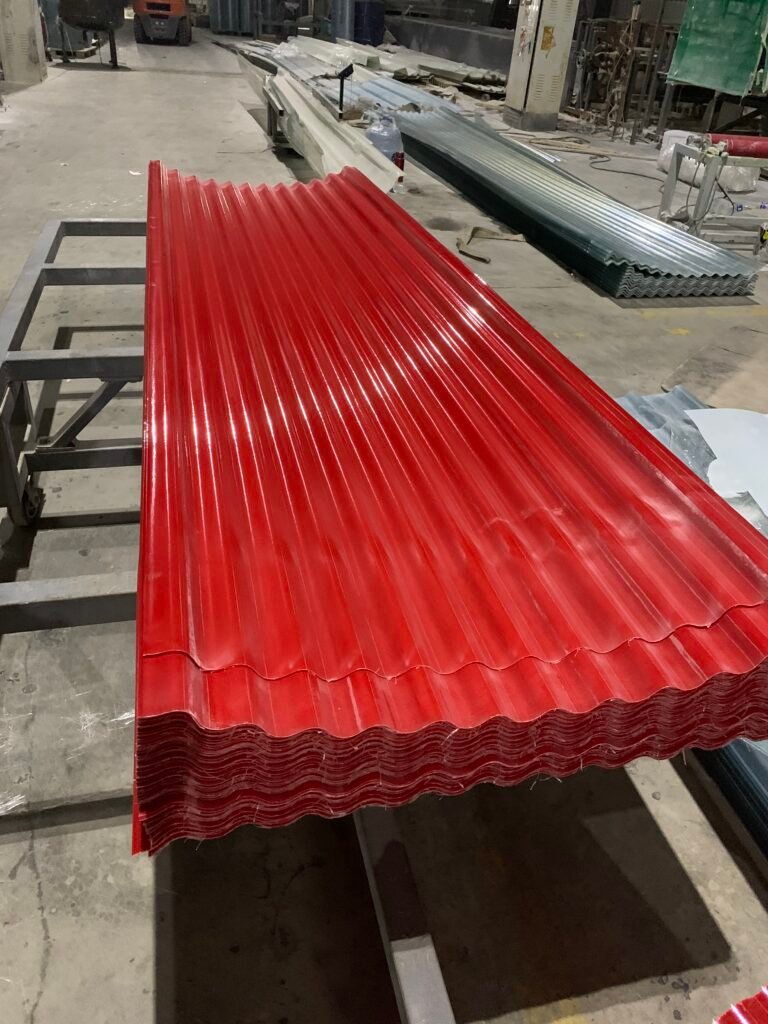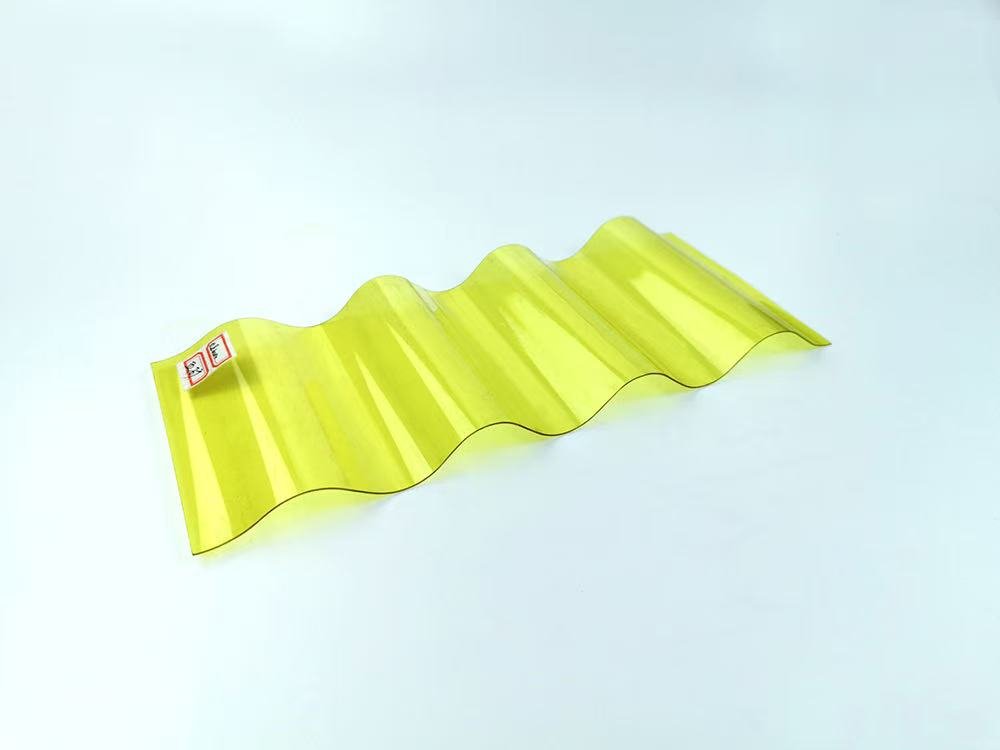
Teja Termoacústica TR5 de UPVC para Bodegas, Galpones y Proyectos Industriales
Buying ASA UPVC roof sheets for wholesale distribution is very different from purchasing roofing for a single building project.
A contractor may simply ask how many sheets are required for one warehouse. An importer, by comparison, must calculate factory price, effective coverage, container loading, inland transport, ocean freight, customs costs, local warehouse requirements and the selling price required to maintain a healthy margin.
Thickness also matters, but it is only one variable.
Two quotations for “1.5MM 2.5 mm ASA UPVC roofing” can represent very different products if the profiles, effective widths, raw-material formulations, surface structures, weights, colors, lengths or packaging methods are different.
For this reason, professional buyers should not begin negotiations by asking only:
“What is your price per square meter?”
A better purchasing process starts by confirming exactly what product is being compared.
This guide explains how roofing distributors and importers in Colombia, Peru, Ecuador, Bolivia, Chile, Paraguay, Uruguay, Brazil and other South American markets can compare ASA UPVC roofing quotations correctly.
The objective is not simply to locate the cheapest supplier.
Instead, the goal is to determine the correct specification, calculate the real landed cost, select an efficient container-loading combination and establish a roofing line that can be sold repeatedly in the local market.
What Determines ASA UPVC Roof Sheet Price?
There is no universal ASA UPVC roofing price.
A quotation is normally influenced by a combination of material, specification, production and commercial variables.
The most important factors include:
- profile;
- thickness;
- weight;
- material formulation;
- ASA surface configuration;
- total width;
- effective width;
- length;
- color;
- order volume;
- customized production;
- accessories;
- packaging;
- OEM requirements;
- container utilization;
- raw-material prices.
Understanding these variables gives buyers much better control during supplier negotiations.
Material Composition
ASA UPVC roofing is commonly described as a multilayer polymer roofing material.
The structural UPVC body and exterior ASA layer or surface configuration contribute to the finished product’s performance.
Different manufacturers may use different formulations.
Consequently, two roofing sheets with the same nominal thickness should not automatically be considered identical.
Ask the factory to clarify the product construction and provide available technical information.
Roof Profile
Profile geometry affects material usage, effective coverage and installation.
Typical product categories include:
- TR5 trapezoidal roofing;
- Spanish-style synthetic resin roof tile;
- corrugated UPVC roofing;
- other trapezoidal industrial profiles.
A deeper or more complex profile may require a different material distribution than a simpler roofing geometry.
This is one reason why quotations should always identify the exact profile.
Thickness
Thickness has a direct relationship with material consumption.
A 3.0 mm roofing sheet normally contains more material than a 2.0 mm sheet of the same profile and formulation.
That does not mean that the thickest roof sheet is automatically the best option.
Instead, the correct thickness must match the building design, purlin spacing, environmental conditions and targeted price segment.
Width and Effective Coverage
Buyers often pay attention to total width while overlooking effective width.
This can lead to incorrect price comparisons.
The total width includes the complete physical width of the roofing panel.
Effective width represents the coverage remaining after side overlap.
For purchasing calculations, effective width is usually the more important number.
Length
Customized lengths can reduce cutting and transverse overlaps on a project.
At the same time, longer sheets affect packing, container utilization, unloading and local transportation.
Therefore, price analysis must consider more than the factory manufacturing cost.
A theoretically efficient long roofing sheet may become inconvenient if local trucks, warehouses or jobsites cannot handle it efficiently.
Color
Standard colors can normally be produced more easily than special customized colors.
Private-label distributors requesting unique colors may face minimum production quantities.
Color matching also requires clear approval procedures.
Order Quantity
Larger orders usually allow manufacturing and logistics to be organized more efficiently.
However, importers should not order excessive quantities simply to obtain a slightly lower factory price.
Inventory turnover remains important.
The best order is not necessarily the largest order.
It is the order that balances factory economics with realistic local sales demand.
How to Compare ASA UPVC Roof Sheet Quotations Correctly
Suppose Supplier A and Supplier B send different prices.
Supplier A appears cheaper.
Before making a decision, compare the following information.
Step 1: Confirm the Same Profile
Do both suppliers offer the same profile dimensions?
Check:
- total width;
- effective width;
- rib height;
- pitch;
- overlap;
- profile drawing.
Without this information, price-per-sheet comparisons have little value.
Step 2: Confirm the Same Thickness
Ask how thickness is measured.
A quotation for 2.5 mm should be compared with another 2.5 mm product only after confirming equivalent measurement methods and construction.
Step 3: Compare Weight
Weight can provide additional information about material usage.
Two sheets with the same stated thickness but significantly different weight require further investigation.
Step 4: Calculate Effective Square-Meter Cost
Imagine a sheet has a total width of approximately one meter but loses some width during overlap.
The customer does not receive usable roof coverage from the overlapped portion.
Therefore, compare the price based on effective coverage rather than physical width alone.
Step 5: Include Accessories
A roof normally requires more than sheets.
Depending on the profile and project, additional items may include:
- ridge caps;
- side flashing;
- wall flashing;
- screws;
- washers;
- sealing accessories;
- valleys;
- gutters.
A cheap sheet with expensive or unavailable accessories can create problems later.
Step 6: Calculate Container Utilization
Ocean freight is a major component of imported roofing cost.
If one supplier packs the container much more efficiently, the landed cost per square meter may become lower even when the factory price is slightly higher.
Step 7: Compare Packaging
Poor packaging can create hidden costs through:
- scratched products;
- broken edges;
- distorted profiles;
- difficult unloading;
- mixed lengths;
- incorrect labels.
Professional packaging therefore has economic value.
ASA UPVC Roof Sheet Thickness Guide
Thickness is one of the highest-value SEO and purchasing topics in this product category.
South American buyers frequently encounter specifications around 2.0 mm, 2.3 mm, 2.5 mm and 3.0 mm in commercial listings, although actual offerings vary by manufacturer and profile. Public product listings in Colombia and Ecuador also prominently merchandise thickness as a purchasing attribute.
The correct thickness should not be selected using one universal rule.
Several project variables must be considered.
2.0 mm UPVC Roof Sheet
A 2.0 mm product may target price-sensitive applications where the profile, purlin spacing and structural design support the specification.
Potential advantages include lower material cost and lower weight.
However, distributors should avoid marketing thinner roofing for applications outside its intended design range.
Engineering and factory installation guidance should always take priority.
2.3 mm UPVC Roof Sheet
Some Latin American products are commercially offered around 2.3 mm, particularly in Spanish-style or thermoacoustic UPVC roofing categories.
This thickness can occupy a useful middle position between entry-level and heavier roofing products.
Whether it suits a specific project still depends on the profile and structural design.
2.5 mm UPVC Roof Sheet
The 2.5 mm UPVC Roof Sheet is especially relevant as a search and purchasing keyword.
Several current Colombian and Ecuadorian product pages prominently advertise 2.5 mm thermoacoustic or ASA PVC roofing.
For distributors, 2.5 mm can represent a commercially attractive specification because customers often perceive it as a more substantial roofing option without moving directly to the thickest available product.
The correct marketing language should still focus on verified technical benefits rather than assuming that thickness alone guarantees performance.
1.5 mm UPVC Roof Sheet
A 1.5mm UPVC Roof Sheet may be selected for buyers seeking a heavier specification.
Common reasons include:
- project specification;
- larger support spacing within approved limits;
- premium product positioning;
- customer preference;
- additional rigidity.
The factory should confirm whether 3.0 mm is suitable for the selected profile.
Distributors should also account for increased weight and reduced container quantity compared with thinner products.
How Thickness Affects Roofing Cost
Thickness influences price in several ways.
First, more material is generally required.
Second, heavier sheets reduce the total square meters that may be loaded before reaching practical container or handling constraints.
Third, buyers may need to maintain different inventory SKUs.
A distributor carrying 1.5mm. 2.0 mm, 2.2mm, 2.5 mm and 3.0 mm in four colors and three lengths can quickly create dozens of stock combinations.
That level of variety may be unnecessary.
A more efficient strategy is to identify:
- one economy specification;
- one mainstream specification;
- one premium specification.
The exact choices depend on local customer demand.
How to Select Thickness for Warehouses
Warehouse buyers frequently prioritize:
- large coverage area;
- installation efficiency;
- low maintenance;
- competitive square-meter cost.
TR5 or another trapezoidal profile may be appropriate where the structural design supports it.
Before selecting thickness, confirm:
- purlin spacing;
- roof slope;
- wind conditions;
- sheet length;
- fastening design.
Do not determine thickness solely by warehouse size.
A 1,000-square-meter warehouse with closely spaced supports may have different requirements from another building of the same area using wider support spacing.
Thickness for Poultry and Livestock Buildings
Agricultural structures create additional considerations.
The roof may be exposed to:
- moisture;
- ammonia;
- dust;
- cleaning operations;
- internal heat.
Corrosion resistance can make UPVC-based roofing attractive.
However, thermal performance and ventilation should be considered as part of the whole building system.
For poultry projects, roofing selection should therefore coordinate:
- thickness;
- roof color;
- ventilation;
- insulation where required;
- purlin spacing;
- building height.
Thickness for Residential Spanish Roof Tile
Residential customers often care about both appearance and perceived product quality.
Spanish-style Synthetic Resin Roof Tile can therefore be sold in different thickness segments.
The sales conversation should not focus only on “thicker is better.”
Instead, explain:
- profile structure;
- weight;
- span recommendation;
- color;
- ASA surface;
- accessories;
- installation.
This helps the distributor sell value rather than thickness alone.
UPVC Roof Sheet Dimensions: What Buyers Must Confirm
Dimensions are another major source of purchasing errors.
Before issuing a purchase order, confirm the complete profile drawing.
Total Width
This is the maximum physical width of the roofing sheet.
Effective Width
This is the width that actually covers the roof after overlap.
Effective width is critical for:
- quantity calculation;
- cost-per-square-meter calculation;
- roof layout;
- container planning.
Profile Height
Rib or wave height influences appearance and structural behavior.
Pitch or Wave Spacing
This determines whether the roofing profile matches existing structural or accessory systems.
Length
Roof sheet lengths can often be customized within factory and transport limits.
Current market listings also commonly feature 5.9 m and 11.8 m ranges or other profile-specific lengths, reinforcing the importance of “roof sheet length” as a commercial search theme.
Standard Length vs Customized Length
Standard lengths simplify stocking.
Customized lengths simplify projects.
Each approach has advantages.
Standard-Length Roofing Sheets
Useful for:
- retail distribution;
- hardware stores;
- predictable warehouse management;
- smaller projects;
- mixed customer demand.
Customized Roofing Lengths
Useful for:
- large warehouses;
- industrial projects;
- contractor orders;
- pre-designed roof dimensions;
- reduced transverse joints.
Professional distributors may offer both.
Why Effective Width Changes Your Real Purchase Cost
Assume one sheet is priced at a lower rate but has a narrower effective coverage.
Another sheet costs slightly more but covers a larger useful area.
The apparent price difference can disappear after installation coverage is calculated.
Therefore, purchasing teams should use:
Factory Cost ÷ Effective Coverage Area
rather than:
Factory Cost ÷ Physical Sheet Area
when comparing roofing systems.
The same principle applies to local selling prices.
Train sales teams to quote based on installed coverage whenever possible.
TR5 Roof Sheet Price: What Affects It?
The TR5 Roof Sheet Price is determined by more than the profile name.
Important variables include:
- profile geometry;
- total width;
- effective width;
- thickness;
- material weight;
- ASA layer;
- length;
- color;
- quantity;
- OEM requirements.
TR5 is especially suitable for industrial distributors because its trapezoidal geometry fits warehouse, factory and agricultural marketing channels.
If the local market already uses a particular TR5 shape, send the drawing to the factory.
Never assume that one manufacturer’s “TR5” automatically matches another manufacturer’s profile.
Spanish Roof Tile Price Factors
Spanish-style ASA UPVC roofing has a more decorative geometry.
Price considerations can include:
- profile complexity;
- thickness;
- surface color;
- tile-step length;
- custom production;
- ridge-cap requirements.
Because this product competes partly on appearance, color consistency becomes commercially important.
Residential distributors should request approved color samples before placing large orders.
Corrugated UPVC Roof Sheet Price
Corrugated roofing can target:
- agricultural buildings;
- workshops;
- sheds;
- industrial buildings;
- general construction.
Buyers should compare:
- wave shape;
- wave spacing;
- thickness;
- effective width;
- length;
- accessories.
Again, a cheap quote is meaningless if it does not match the target market’s familiar profile.
What Is the MOQ for ASA UPVC Roofing?
MOQ means minimum order quantity.
The actual UPVC Roof Sheet MOQ depends on factory policy, profile, color, production schedule and customization.
Public international listings show examples ranging from hundreds to thousands of square meters, demonstrating how widely MOQ can vary between suppliers and products.
For buyers, the more important question is:
What MOQ applies to my exact specification?
Ask separately about:
- standard color MOQ;
- special color MOQ;
- standard length MOQ;
- OEM film MOQ;
- private-label packaging MOQ;
- customized profile MOQ.
These quantities may not be identical.
How New Importers Should Approach MOQ
A first-time importer should resist the temptation to order too many variations.
Suppose you purchase:
- three profiles;
- three thicknesses;
- five colors;
- four lengths.
That creates 180 potential combinations before accessories are considered.
Most distributors do not need this complexity.
A better launch strategy might use:
- one industrial profile;
- one residential profile;
- one agricultural profile;
- two or three colors;
- one or two mainstream thicknesses;
- several practical lengths.
Sales data can then determine future expansion.
20GP vs 40HQ Roofing Sheet Loading
Container planning is essential because roof sheets are bulky and long.
Importers typically evaluate:
- 20GP;
- 40GP;
- 40HQ.
The best option depends on product length, weight and packing.
A 40HQ often offers useful volume for larger orders, while shorter lengths may also work with smaller containers.
Exact loading quantities should always be calculated after specifications are finalized.
Avoid publishing universal “X square meters per container” statements unless they are tied to a precise profile, thickness and length.
Factors Affecting Container Loading Quantity
Thickness
Thicker sheets weigh more.
Length
Long panels affect container arrangement.
Profile
Some profiles nest more efficiently than others.
Accessories
Ridge caps and other accessories consume space.
Packaging
Protective packaging also occupies container volume.
Weight Restrictions
Container loading must comply with transportation and legal weight limits.
For these reasons, container calculations should be completed for each purchase order.
Why Container Loading Matters to Your Profit
Imagine two factories.
Factory A offers a lower sheet price but inefficient packing.
Factory B charges slightly more while fitting substantially more effective roof area into the same freight cost.
The second option may produce a lower landed cost.
This is why professional importers should calculate:
Ocean Freight ÷ Loaded Effective Square Meters
The result reveals the freight cost per square meter.
That number is often more useful than the total freight invoice.
UPVC Roofing Packaging Requirements
Good export packaging should protect roofing during:
- factory handling;
- container loading;
- sea transportation;
- port unloading;
- inland transportation;
- warehouse storage.
For long roofing sheets, edge and end protection deserve particular attention.
Products should also be organized clearly by:
- profile;
- color;
- thickness;
- length;
- customer SKU.
This saves time during unloading and local distribution.
Private-Label Packaging for Roofing Distributors
Packaging is an important branding opportunity.
An importer may request:
- company logo;
- product model;
- dimensions;
- color;
- batch information;
- installation reminders;
- barcode;
- contact details.
Private-label packaging helps distinguish a distributor’s roofing line from generic imports.
However, branding should never replace product consistency.
A strong brand must be supported by repeatable specifications and quality control.
Roofing Sheet Accessories Buyers Often Forget
Many first-time importers focus entirely on roof sheets.
After the order arrives, they discover that the market also requires matching accessories.
Important products can include:
Ridge Cap
Installed along the roof ridge.
Side Flashing
Used around edges or junctions.
Wall Flashing
Helps detail connections between roofing and vertical walls.
Fasteners
Roofing screws must be appropriate for the structural substrate.
Washers
Washers contribute to proper sealing around fasteners.
Caps
Some roofing systems use matching decorative or protective caps.
Seal Components
Depending on roof design, appropriate sealing products may be required.
A complete roofing supplier should discuss accessories before finalizing the order.
Why Accessories Improve Distributor Margins
Accessories create several commercial advantages.
They increase the average order value.
More importantly, they make the distributor more useful to installers.
A customer purchasing a complete roof system is less likely to search for multiple suppliers.
Therefore, build product packages such as:
Roof Sheet + Ridge + Screw + Washer + Installation Guide
rather than selling sheets alone.
UPVC Roof Sheet Installation: What Buyers Need to Know
Installation content attracts substantial informational search traffic and also reduces after-sales problems.
The exact installation requirements vary by profile and project, but several principles apply broadly.
Confirm Roof Structure
Purlins should be correctly aligned and designed for the roofing system.
Confirm Roof Slope
Roof pitch affects water drainage and overlap performance.
Use Correct Purlin Spacing
The approved spacing depends on:
- profile;
- thickness;
- loads;
- local climate;
- building design.
Never publish a universal purlin spacing unless it comes from verified engineering data for that exact product.
Allow Thermal Movement
UPVC roofing expands and contracts with temperature.
Fastening details must accommodate this movement.
Avoid Over-Tightening
Excessive tightening can deform roofing around fasteners.
Use Appropriate Overlap
Side and end overlaps should follow the profile design and environmental requirements.
Work Safely
Roofing installation involves work at height.
Qualified installers and appropriate safety equipment are required.
UPVC Roof Sheet Purlin Spacing
“UPVC purlin spacing” is an important technical keyword because contractors need this information before installation.
Unfortunately, it is also an area where websites frequently provide overly generic advice.
Purlin spacing cannot be selected using thickness alone.
The correct value depends on:
- profile shape;
- structural strength;
- roof slope;
- wind load;
- sheet length;
- local building requirements.
Your product page should therefore publish the factory’s tested or engineered recommendations only after confirming them.
For SEO purposes, answering the question honestly is better than inventing a number.
Roof Sheet Overlap Guide
Roofing sheets typically use side overlap and, when necessary, end overlap.
The exact configuration depends on profile design.
Reducing overlap too aggressively may increase leakage risk.
Excessive overlap wastes material.
The technical drawing should therefore identify the correct installation position.
Distributors should include overlap details in installation manuals and dealer training.
Thermoacoustic UPVC Roofing
In Colombia and Ecuador, teja termoacústica is a meaningful commercial term, and local suppliers prominently market UPVC roofing around thermal/acoustic performance.
For an international English-language page, related keywords can include:
- thermoacoustic UPVC roof sheet;
- heat insulation roofing;
- thermal insulation roof tile;
- sound-reducing roofing sheet.
Marketing claims should remain measured.
Thermal and acoustic performance depends on the complete roof assembly, including:
- roof material;
- thickness;
- color;
- insulation;
- ventilation;
- ceiling;
- building geometry.
Avoid publishing unsupported temperature-reduction or decibel claims.
Heat Insulation Roofing for Hot South American Climates
Heat management matters in many South American projects.
Warehouse owners, poultry farmers and residential buyers frequently consider indoor temperature when selecting roofing.
ASA UPVC products may form part of a heat-management strategy.
Additional factors include:
- lighter exterior colors;
- roof ventilation;
- insulation;
- roof height;
- ceiling design;
- airflow.
A good supplier should discuss the whole building rather than promising that one roofing panel solves every thermal challenge.
Anti-Corrosion Roofing for Coastal and Agricultural Areas
Corrosion resistance is another high-value commercial keyword.
Applications can include:
- coastal warehouses;
- poultry farms;
- livestock buildings;
- fertilizer storage;
- food-processing areas;
- humid industrial environments.
Because UPVC is non-metallic, it does not rust in the same manner as ordinary steel.
However, screws and structural components may still require corrosion-resistant selection.
The roof must be evaluated as a system.
Chemical-Resistant Roofing
Industrial buyers may ask whether UPVC roofing resists chemicals.
This question cannot be answered with a universal “yes.”
Chemical compatibility depends on:
- chemical type;
- concentration;
- temperature;
- exposure duration.
Ask customers to identify the substances present.
Then confirm suitability with technical data before offering a recommendation.
This responsible approach strengthens credibility.
UV-Resistant ASA Roofing
UV performance is one of the main reasons buyers search for ASA-surfaced roofing.
South American markets can experience strong solar exposure, particularly at high altitude and in tropical regions.
Buyers therefore search terms such as:
- UV resistant roofing sheet;
- ASA UV roof tile;
- weather-resistant roof sheet;
- color-stable roofing.
Your content should explain the role of the ASA exterior surface while avoiding unsupported lifetime guarantees.
Anti-Hail and Impact Resistance
Regions exposed to hail create another search opportunity.
Keywords include:
- anti-hail roofing;
- impact-resistant UPVC roof sheet;
- hail-resistant roof tile.
Some local sellers currently promote UPVC sheets with anti-hail or impact-resistance claims, showing clear commercial interest in this feature.
Before publishing numeric load or impact claims, use only verified test data from the actual product.
ASA UPVC Roof Sheet Lifespan
“UPVC roof lifespan” and “how long does ASA roofing last” are valuable informational keywords.
The safest answer is that lifespan depends on:
- material formulation;
- ASA surface;
- installation;
- UV exposure;
- climate;
- maintenance;
- structural movement.
Do not promise a universal service life without product-specific warranty and test support.
Instead, explain how customers can maximize performance through correct specification and installation.
ASA Roof Sheet Warranty
Warranty should be written clearly.
Important questions include:
- What does the warranty cover?
- Does it cover color?
- Does it cover structural defects?
- What installation conditions apply?
- Are labor costs included?
- Is proof of purchase required?
- What exclusions apply?
For distributors, a clear warranty policy is much more valuable than an exaggerated number printed on a brochure.
How South American Buyers Calculate Landed Cost
Factory price is only the beginning.
The real cost includes:
- Product cost.
- Accessories.
- Packaging.
- Inland China logistics where applicable.
- Export handling.
- Ocean freight.
- Insurance where applicable.
- Import duties and taxes.
- Port charges.
- Inland transport in the destination country.
- Warehouse cost.
- Sales and distribution expenses.
A professional importer should calculate landed cost per effective square meter.
That metric makes different suppliers easier to compare.
Roofing Sheet Import Cost From China
Import cost changes continuously because freight rates, raw-material prices and exchange rates vary.
Therefore, avoid publishing a fixed universal cost.
Instead, your website should invite buyers to submit:
- destination port;
- profile;
- thickness;
- length;
- quantity.
The sales team can then prepare a current quotation.
This approach converts SEO traffic into inquiries.
Importing Roofing Sheets to Colombia
Colombian buyers frequently encounter the Spanish terms:
- teja UPVC;
- teja termoacústica;
- teja PVC;
- teja ASA;
- teja española;
- cubierta UPVC.
A Colombia-focused importer should compare local market dimensions and installation expectations before finalizing a Chinese profile.
For an industrial product line, trapezoidal profiles can be important.
Residential distributors may prioritize Spanish tile and thermoacoustic positioning.
Importing Roofing Sheets to Ecuador
Current Ecuadorian retail listings prominently show Spanish-style ASA PVC roofing by color, length and thickness, confirming that these are meaningful local merchandising variables.
A distributor planning to compete in Ecuador should therefore pay particular attention to:
- Spanish-style profiles;
- terracotta;
- grey;
- green;
- common local lengths;
- 2.5 mm and related thickness terminology;
- compatible accessories.
This is a stronger strategy than importing a product without first examining local market formats.
Importing Roofing Sheets to Peru
Peruvian demand can include:
- industrial roofing;
- agricultural roofing;
- synthetic resin tiles;
- corrugated UPVC;
- PVC roofing.
Regional climate differences make project segmentation important.
Coastal projects may prioritize corrosion resistance and UV performance.
Industrial projects often focus on practical trapezoidal profiles and efficient installed cost.
Importing Roofing Sheets to Bolivia
Bolivia includes both lower and high-altitude markets.
UV exposure, temperature changes and local construction practices should be considered.
For distributors, product education can become a competitive advantage.
Provide:
- profile drawings;
- installation instructions;
- technical sheets;
- color cards;
- accessories.
This allows dealers to sell the product more professionally.
Why OEM Matters for Roofing Distributors
Price competition is difficult when every importer sells the same generic product.
OEM creates differentiation.
Possible customization includes:
- brand;
- protective film;
- packaging;
- labels;
- colors;
- lengths;
- product codes;
- catalogs;
- technical documents.
The objective is to create a repeatable local product line rather than one container of anonymous roofing.
Private-Label Roofing Strategy
A strong private-label program should define:
Product Name
Create easy-to-remember local model names.
Specification
Keep each SKU consistent.
Color Range
Start with a limited range.
Packaging
Make warehouse identification easy.
Technical Documentation
Provide Spanish installation and specification guides.
Marketing Assets
Prepare:
- real product photographs;
- installation photographs;
- loading photographs;
- technical drawings;
- short videos.
This creates a more professional distribution brand.
How to Choose a Roofing Factory in China
Do not select a supplier based only on a website.
Verify available information such as:
- production facility;
- profile capability;
- samples;
- technical drawings;
- QC procedures;
- packaging;
- loading experience;
- OEM capability;
- export experience.
Ask detailed technical questions.
A supplier that answers clearly before the sale is more likely to support the distributor after the purchase.
Factory Price vs Trading Company Price
A direct factory relationship can offer advantages for customized manufacturing.
However, trading companies may provide product-combination flexibility.
The right partner depends on the buyer.
If your priorities are:
- consistent profiles;
- OEM production;
- long-term product development;
- custom colors;
- customized lengths;
direct cooperation with a Roofing Sheet Manufacturer can be strategically valuable.
Sample Before Bulk Order
For a new supplier relationship, samples can help verify:
- color;
- surface;
- thickness;
- profile;
- material appearance.
A small sample cannot reproduce every long-term roofing condition, but it helps buyers check basic product characteristics before committing to a larger order.
For customized colors, sample approval is especially important.
Pre-Shipment Inspection
Importers should establish inspection requirements before production begins.
Potential checks include:
- quantity;
- dimensions;
- thickness;
- color;
- profile;
- labels;
- packaging;
- accessories.
For larger orders, an agreed inspection process reduces disputes.
Documents for International Roofing Orders
Commercial documentation depends on the destination and transaction.
Common export documents may include:
- commercial invoice;
- packing list;
- bill of lading;
- certificate documents when applicable and agreed;
- product technical documents.
Importers should confirm destination-country requirements with their customs broker before shipment.
Frequently Asked Questions
How much does ASA UPVC roofing cost?
Price depends on profile, thickness, formulation, color, length, order volume, accessories and packaging.
Is 2.5 mm UPVC roofing popular?
2.5 mm appears frequently in current South American commercial product listings and is an important market specification, but suitability depends on project design.
Is 3 mm roofing better than 2.5 mm?
Not automatically. It is heavier and uses more material, but the correct specification depends on structural and project requirements.
What is the standard UPVC roof sheet width?
Width varies by profile. Always request total and effective widths from the manufacturer.
What is effective width?
Effective width is the usable coverage after side overlap.
Can length be customized?
Many factories offer customized lengths within production and transport limitations.
What is the maximum length?
Maximum practical length depends on profile, production, container and local handling requirements.
What is the MOQ?
MOQ varies by supplier, color, profile and customization.
How many roofing sheets fit in a 40HQ container?
The answer depends on thickness, length, profile, packaging and weight.
Is 20GP suitable for roofing sheets?
It may be suitable for certain lengths and order combinations. Loading should be calculated specifically.
Can I customize packaging?
OEM packaging may be available subject to order quantity.
Can I print my logo?
Private-label printing or labeling may be available depending on production requirements.
What accessories are required?
Typical items include ridge caps, flashing, screws, washers and sealing components.
How far apart should UPVC roofing purlins be?
Use the verified recommendation for the exact profile, thickness and structural loading. There is no safe universal spacing.
How much roof overlap is required?
Overlap depends on profile geometry, roof slope and local climate.
Is UPVC roofing thermoacoustic?
UPVC roofing is often marketed as thermoacoustic in Latin America, but actual thermal and acoustic performance depends on the whole roof assembly.
Is ASA UPVC resistant to UV?
ASA exterior surfaces are used for weather-resistant outdoor applications. Actual performance depends on formulation and product design.
Can ASA UPVC roofing resist hail?
Impact performance must be confirmed using product-specific test information.
Does ASA UPVC rust?
UPVC itself is non-metallic and does not rust like steel, although fasteners and supporting structures may still corrode.
Can it be used near the sea?
It can be considered for coastal projects, but structural wind design and corrosion-resistant accessories remain important.
Can it be used on poultry farms?
Yes, subject to project design and ventilation requirements.
Can it be used on chemical plants?
Chemical compatibility should be confirmed for the specific substances present.
What colors are available?
Typical options may include terracotta, grey, red, green, blue and white, depending on the factory.
Which color is best for hot climates?
Lighter colors may support heat-management strategies, but ventilation and insulation are also important.
Should I buy from a factory or trading company?
Buyers requiring long-term OEM manufacturing and consistent customization may benefit from direct factory cooperation.
How should I compare two quotations?
Compare effective square-meter cost, thickness, profile, weight, packaging, accessories and container utilization.
Request an Accurate ASA UPVC Roofing Quotation
A useful quotation requires more information than the words “ASA roofing price.”
Send:
Country:
Destination Port:
Profile: TR5 / Spanish Tile / Corrugated
Thickness:
Total Width / Effective Width:
Length:
Color:
Quantity:
Accessories:
OEM Requirements:
Expected Order Date:
If you do not yet know the exact specification, send a roof drawing, existing profile photograph or information about your local market.
Our team can then help identify the appropriate specification before preparing the quotation.
Conclusion: Buy Specifications, Not Just a Cheap Square-Meter Price
Successful roofing importers do not build their business around the lowest factory quotation.
They build it around a product that can be sold repeatedly.
That requires:
- the right profile;
- the right thickness;
- efficient effective width;
- sensible product lengths;
- reliable accessories;
- good container utilization;
- consistent packaging;
- clear installation information;
- competitive landed cost;
- stable OEM production.
For a South American distributor, the difference between a profitable roofing line and a problematic import often comes down to specification discipline.
Ask detailed questions before ordering.
Compare effective installed cost instead of sheet price.
Calculate container efficiency.
Keep the initial SKU range manageable.
Provide installers with clear technical information.
Most importantly, work with a supplier capable of supporting repeat orders with consistent specifications.
That is the real purpose of choosing an experienced ASA UPVC Roofing Sheet Manufacturer rather than simply searching for the lowest price.
推荐产品
-
ASA Synthetic Resin Tile PVC Spanish Roofing Sheet Anti Fading for Villa and Industrial Roof
原价为:$1.50。$1.10当前价格为:$1.10。 -
Corrugated Polycarbonate Roofing Sheet for Brazil
原价为:$1.50。$1.10当前价格为:$1.10。 -
Fiberglass Flat Sheet FRP Smooth Panel for Sunroom Wall and Composite Board Substrate
原价为:$1.50。$1.10当前价格为:$1.10。 -
Fiberglass Skylight Panel | High-Strength FRP Roof Sheets
原价为:$1.50。$1.10当前价格为:$1.10。 -
FRP Corrugated Roofing Sheet | Anti-Corrosive Fiberglass Wave Tiles for Industrial & Greenhouse
原价为:$1.50。$1.10当前价格为:$1.10。 -
Heavy Duty Fiberglass Rain Gutter / FRP Drainage Channel – Custom Sizes Available
原价为:$1.50。$1.10当前价格为:$1.10。 -
Opaque FRP Roofing Sheet | Heavy-Duty Fiberglass Panels
原价为:$1.50。$1.10当前价格为:$1.10。 -
Polycarbonate Corrugated Sheet | Roofing Panel Factory
原价为:$1.50。$1.10当前价格为:$1.10。 -
Polycarbonate Hollow Sheet Twinwall UV Protected Plastic Roofing Panel for Greenhouse and Canopy
原价为:$1.50。$1.10当前价格为:$1.10。