Looking for durable factory panels? Learn how to choose FRP roofing sheet based on thickness, UV protection, and profiles for your industrial project.
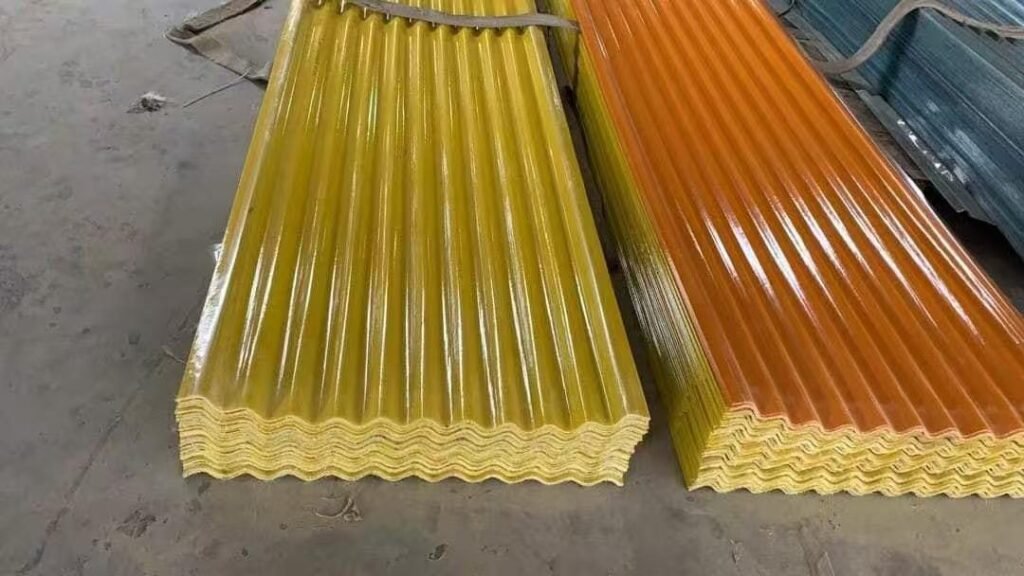
Fiberglass Reinforced Plastic (FRP) roofing sheets have became incredibly popular in industrial, commercial, and agricultural construction. Because they offer a perfect combination of high light transmission, corrosion resistance, and lightweight strength, they are widely used for warehouse skylights, steel structure plants, and greenhouse roofing.
However, selecting the right panels for your specific project can be challenging given the variety of specifications available. Therefore, we have created this ultimate buyer’s guide to help you understand how to choose FRP roofing sheet effectively.
1. Determine the Proper Thickness and Weight
First, you need to consider the thickness of the sheets, as this directly affects the roof’s load-bearing capacity and wind resistance. Typically, FRP roofing sheets range from 0.8mm to 3.0mm in thickness.
- 1.2mm to 1.5mm: This is the standard industrial grade. It is ideal for most factory skylights, general warehouses, and patio covers.
- 2.0mm to 3.0mm: This heavy-duty grade is designed for regions with extreme weather conditions, such as heavy snow loads, high winds, or chemical corrodibility.
💡 Factory Tip: Standard configurations often require a weight of 1500g/m² or 2400g/m². Choosing the correct thickness ensures long-term structural safety without adding unnecessary cost.
2. Evaluate Light Transmission and Color
Second, you must choose the right color based on how much natural daylight your building interior requires.
- Clear / Transparent Panels: These provide up to 80%–85% light transmission. Consequently, they are perfect for greenhouses and industrial workshops that require maximum natural daylight to reduce electricity costs.
- Opaque / Colored Panels (Opal, Sky Blue, Green): These offer softer, diffused light (around 30%–60% transmission). As a result, they significantly reduce glare and indoor heat buildup, making them excellent for carports and livestock farms.
3. Prioritize UV Protection and Weather Resistance
Next, never overlook the importance of UV protection. High-quality FRP sheets must have a UV-protective coating or film on the outer surface.
Without this protective layer, solar radiation will cause the fiberglass to turn yellow, become brittle, and lose its light transmission within just a few years. Therefore, always verify with your supplier that the panels feature a premium anti-aging film (such as Melinex film) on the sun-facing side.
4. Match the Profile with Existing Roofing Tiles
After that, you need to ensure compatibility with your overall structure. If you are integrating FRP panels into an existing steel or PVC roof as skylights, the profile must match exactly.
FRP sheets can be manufactured into hundreds of corrugation shapes, including:
- Round Wave Profiles: Excellent for traditional roofing and agricultural sheds.
- Trapezoidal / Angular Profiles: The standard choice for modern industrial steel buildings to ensure seamless interlocking and prevent water leakage.
5. Consider Fire Retardancy and Chemical Resistance
Finally, consider the specific environment of your project. If you are building a roofing system for chemical processing plants, fertilizer warehouses, or smelting factories, standard plastic will degrade quickly.
In these cases, you should opt for specialized resin formulations:
- Class I or Class II Fire Retardant FRP: Essential for meeting local building safety regulations and preventing the spread of flames.
- Highly Corrosion-Resistant FRP: Designed specifically to withstand acid and alkali vapors.
Conclusion
To sum up, learning how to choose FRP roofing sheet comes down to balancing thickness, light requirements, UV stability, and shape matching. By paying close attention to these technical factors, you can guarantee a lifespan of 15 to 25 years for your roofing system.
Are you looking for a reliable wholesale manufacturer for your next B2B project? Contact our professional engineering team today to get customized sizes, free samples, and factory-direct pricing for high-quality FRP roofing solutions!
How to Choose FRP Roofing Sheet: The Ultimate Buyer’s Guide
Selecting FRP roofing sheets requires weighing several technical factors to ensure long-term performance, safety, and cost efficiency. The following framework provides a clear pathway to identify the most suitable panels for industrial, commercial, or agricultural projects.
1. Determine the Proper Thickness and Weight
- Evaluate the roof’s load-bearing requirements and wind exposure. FRP sheets commonly range from .8 mm to 3. mm in thickness.
- Consider regional conditions:
- 1.2 mm to 1.5 mm: Suitable for standard skylights, general warehouses, and shade structures.
- mm to 3. mm: Recommended for areas with severe weather, heavy snow loads, or heightened chemical exposure.
- 1.2 mm to 1.5 mm: Suitable for standard skylights, general warehouses, and shade structures.
- Verify installation weights against structure design to avoid unnecessary overspecification or under-protection.
- Factory guidance often specifies typical weight targets (for example, 150 g/m² to 240 g/m²) to balance strength and material efficiency.
2. Evaluate Light Transmission and Color
- Determine interior daylight requirements to select appropriate translucency.
- Clear / Transparent Panels: Offer high light transmission (approximately 80%–85), ideal for greenhouses and spaces prioritizing natural illumination.
- Opaque / Colored Panels (Opal, Sky Blue, Green): Provide diffused light (roughly 30%–60 transmission), reducing glare and heat buildup, suitable for carports and livestock facilities.
- Balance daylight rendement with energy use and interior comfort to optimize operating costs.
3. Prioritize UV Protection and Weather Resistance
- Confirm the presence of a UV-protective coating or film on the outer surface to prevent yellowing, brittleness, and loss of light transmission over time.
- Seek panels with a robust anti-aging layer on the sun-facing side, and verify compatibility with the intended exposure environment.
- Consider service life expectations and regional sun intensity when selecting protective specifications.
4. Match the Profile with Existing Roofing Tiles
- Ensure compatibility with the building’s existing roof profile if integrating FRP panels as skylights or replacements.
- FRP sheets can be manufactured in diverse corrugation styles. Common profiles include:
- Round Wave: Traditional roofing and agricultural applications.
- Trapezoidal / Angular: Modern industrial applications with interlocking features to prevent water ingress.
- Align profile geometry with structure to achieve proper sealing, drainage, and aesthetic coherence.
5. Consider Fire Retardancy and Chemical Resistance
- Assess the environmental conditions of the project, particularly for chemical processing facilities or harsh industrial settings.
- Opt for specialized resin formulations when required:
- Class I or Class II Fire Retardant FRP: Supports compliance with local fire safety regulations.
- Highly Corrosion-Resistant FRP: Resists acid and alkali vapors common in certain industrial environments.
- Ensure the selected solution meets applicable safety and performance standards for the intended application.
6. Additional Considerations
- Profile compatibility with fastening systems and insulation requirements.
- Long-term durability, maintenance needs, and potential for coatings or repair strategies.
- Availability of supplier support, customization options, and lead times for project planning.
- Total cost of ownership, including initial purchase, installation, and anticipated replacement cycles.
7. Practical Steps for Decision-Making
- Define project requirements precisely: climate, chemical exposure, daylight needs, and structural constraints.
- Consult with experienced suppliers or engineering teams to verify specifications against building codes.
- Request samples and technical data sheets to compare performance metrics such as light transmission, UV resistance, and fire ratings.
- Conduct a cost-benefit assessment that weighs initial cost against expected service life and energy savings.
8. Conclusion
Choosing the appropriate FRP roofing sheet involves balancing thickness, light transmission, UV stability, profile compatibility, and environmental resilience. By systematically evaluating these factors, one can select a solution that delivers reliable performance, cost efficiency, and extended service life for the intended application. For tailored guidance and spec-compliant options, engage with a reputable FRP manufacturer or engineering consultant to obtain precise recommendations and customized material solutions.


